home : case study
Providence Healthcare / Accountability Matrix
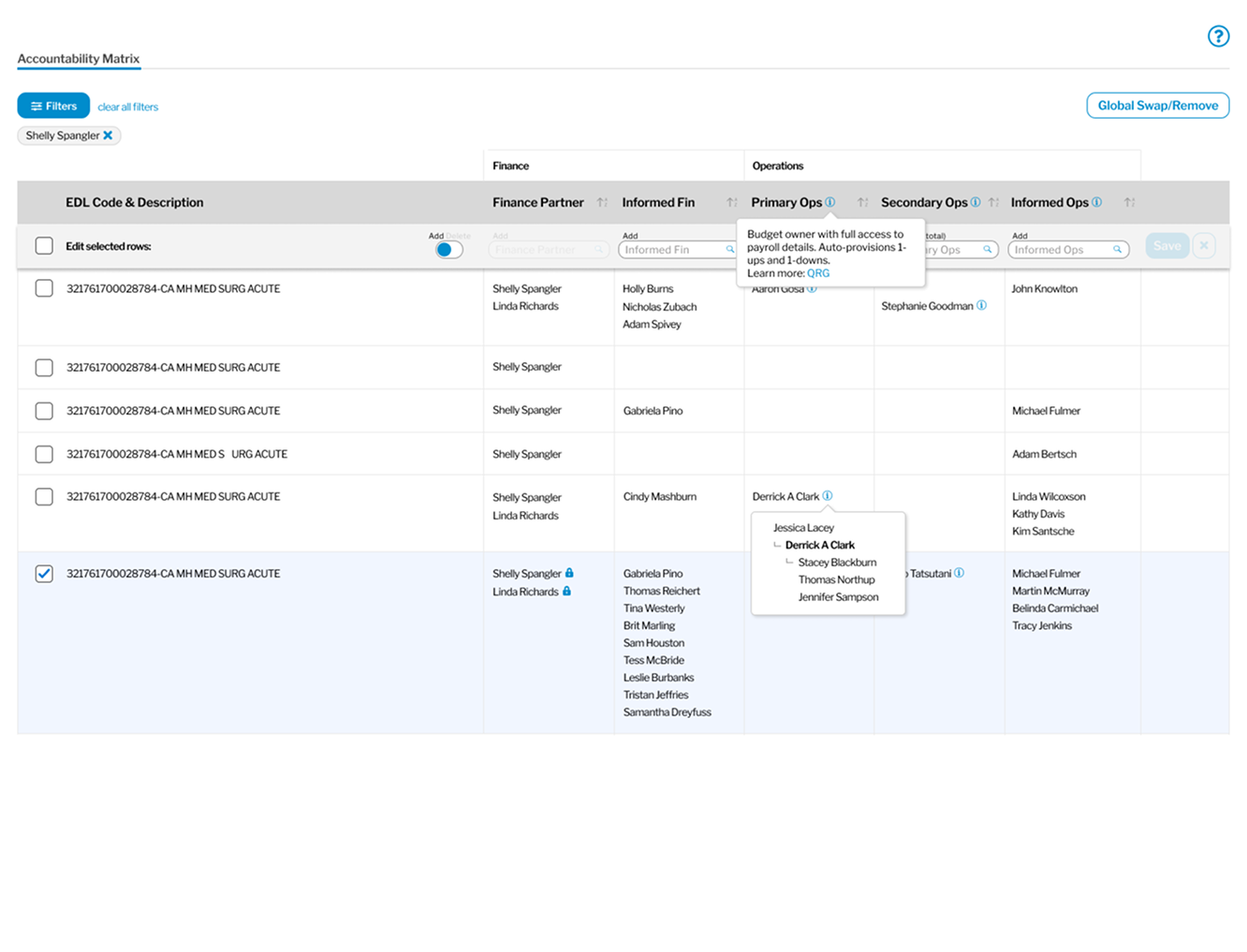
Designed a system-wide governance tool that brought order to one of the most complex financial ecosystems in healthcare, replacing a fragmented, manual process with a single platform that automated reporting assignments across Providence's entire organization.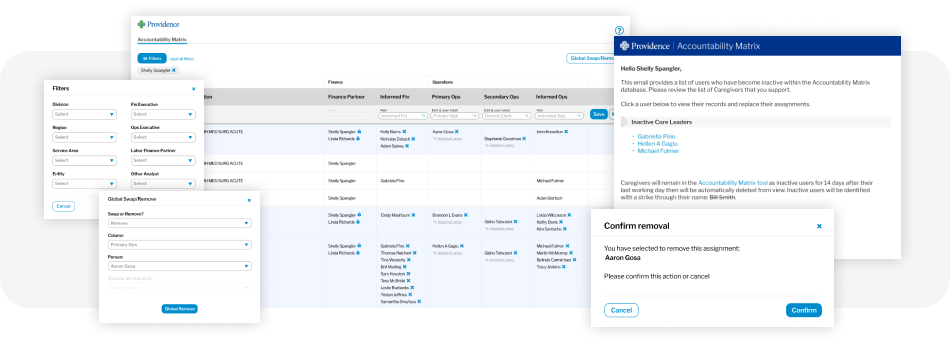
Overview
Providence Healthcare manages an enormous financial ecosystem spanning thousands of departments, multiple regions, and a broad community of finance and operations users. Before this project, there was no reliable way to determine which financial caregivers were responsible for which departments. The result was fragmented spreadsheets, manual distribution lists, access inconsistencies, and gaps in critical reporting.The stakes were significant. Assignments made in this system fed downstream into multiple platforms including ValueLens, PowerBI, and Tableau, triggering automated delivery of financial reports and data to thousands of end users on daily and weekly schedules. When the assignment data was wrong or missing, the downstream effects rippled across the entire organization.
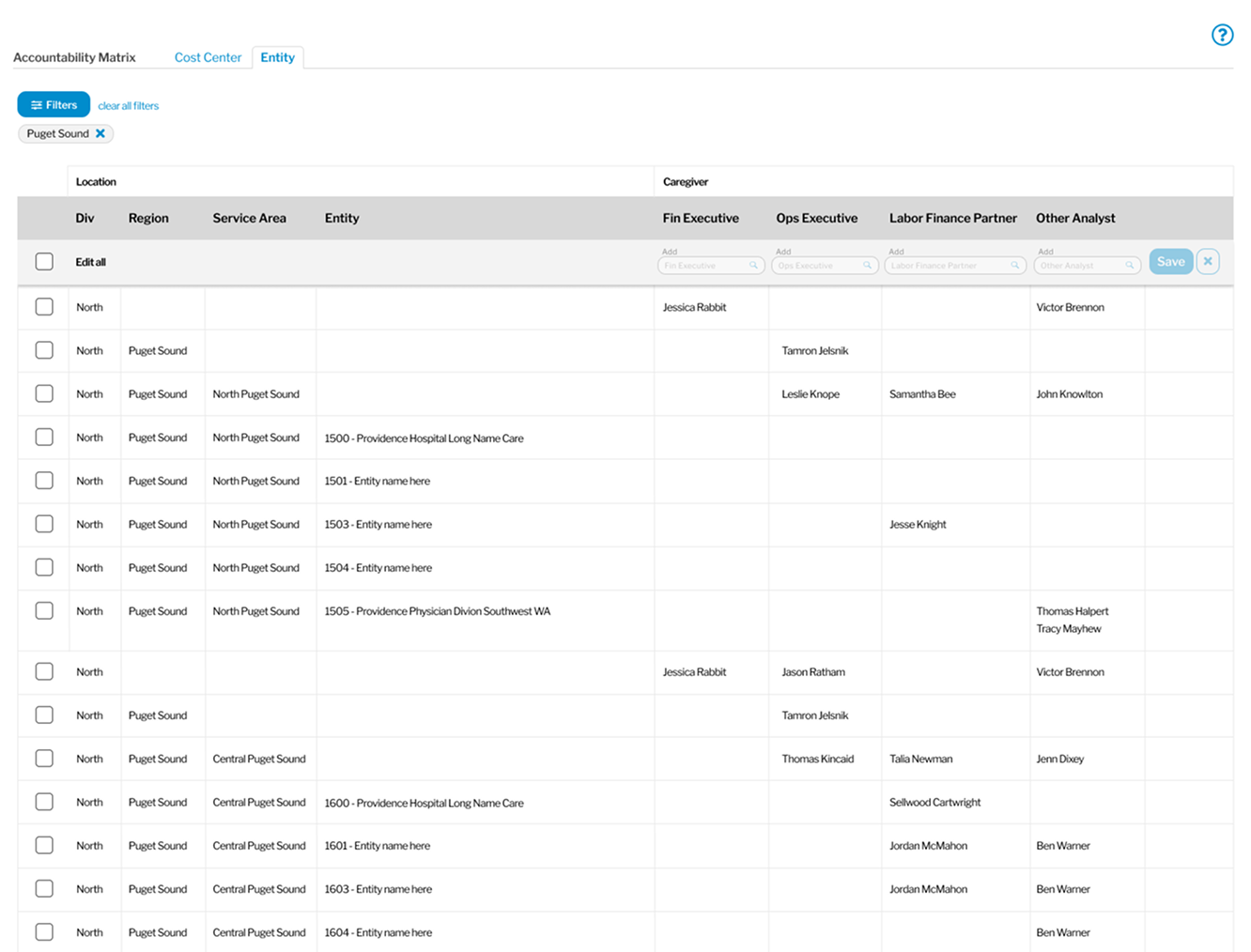
I was brought in to design a new internal tool called the Accountability Matrix, using an existing Business Requirements Document as the foundational reference. The tool provides a single system of record for assigning, maintaining, and governing caregiver responsibilities across Finance and Operations roles throughout Providence.
Impact at a glance:
- Replaced a fragmented, manual assignment process with a single governed platform used across Providence's hospitals, departments, and regions
- Automated downstream delivery of financial reports and data to thousands of end users, eliminating manual distribution and the institutional knowledge previously required to manage it
- Empowered Finance Partners to self-manage assignments accurately without relying on spreadsheets or dev team involvement
- Gave Super Users global editing, batch upload, change history, and rollback capabilities for the first time
- Feeds real-time, precise data into ValueLens, PowerBI, Tableau, and other downstream reporting tools across the organization
My Approach
The discovery phase was already complete when I joined the project. My role was to take a detailed Business Requirements Document covering 40+ use cases, synthesize it into a coherent UX architecture, validate that thinking with stakeholders, and bring it across the finish line with an internal developer as a working, production-ready tool inside Providence's ecosystem.
Information Architecture & Wireframes
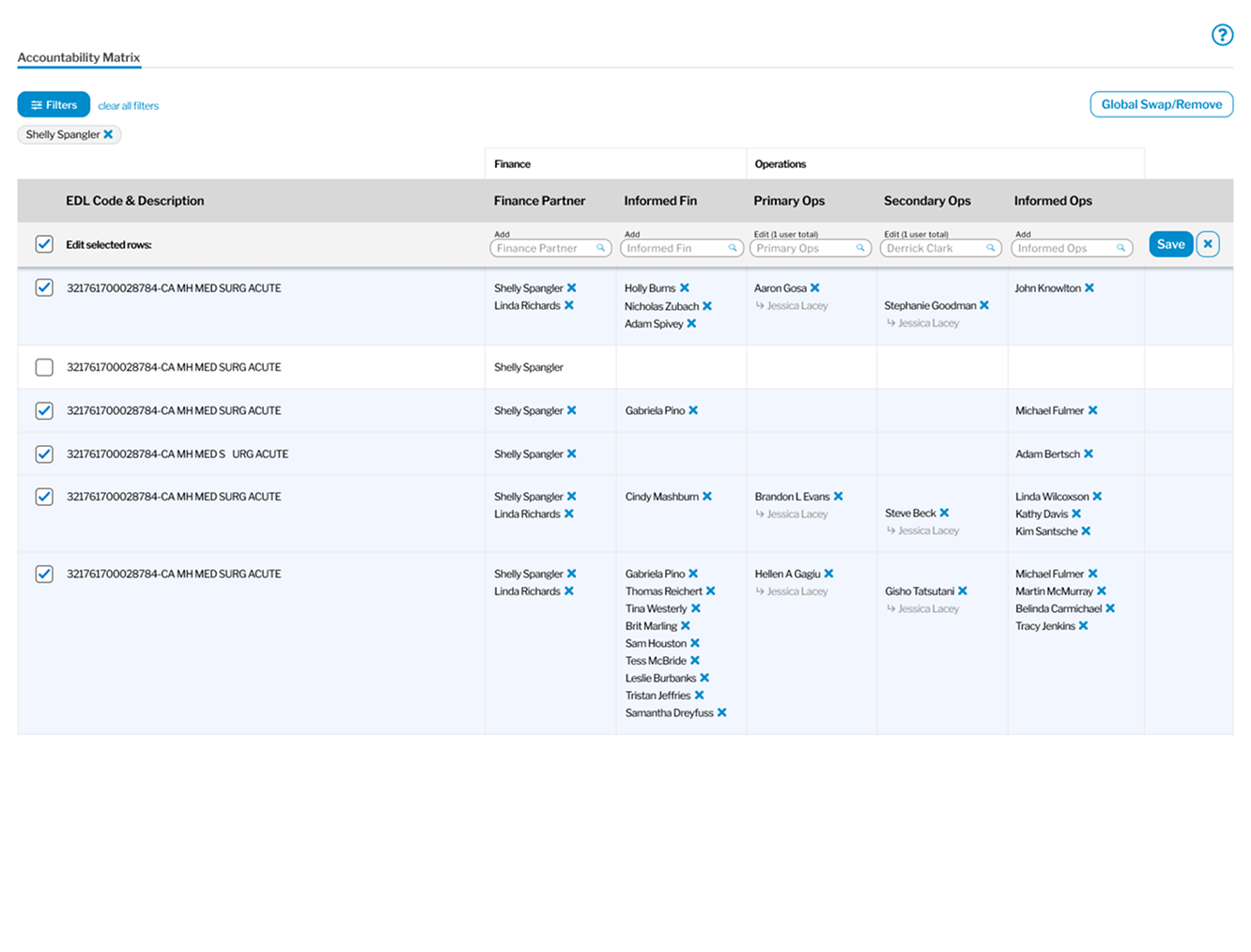
I created low-fidelity wireframes outlining key screens:
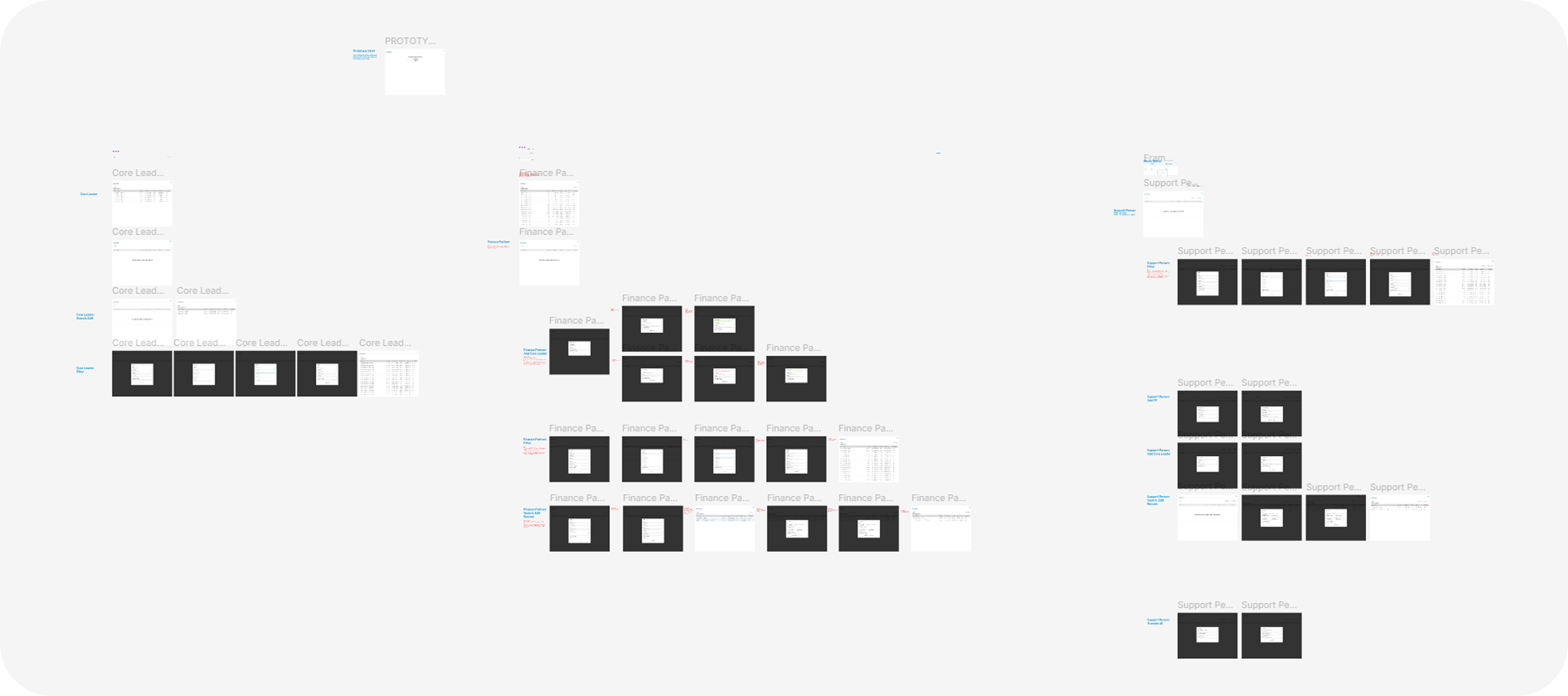
I created low-fidelity wireframes outlining key screens:
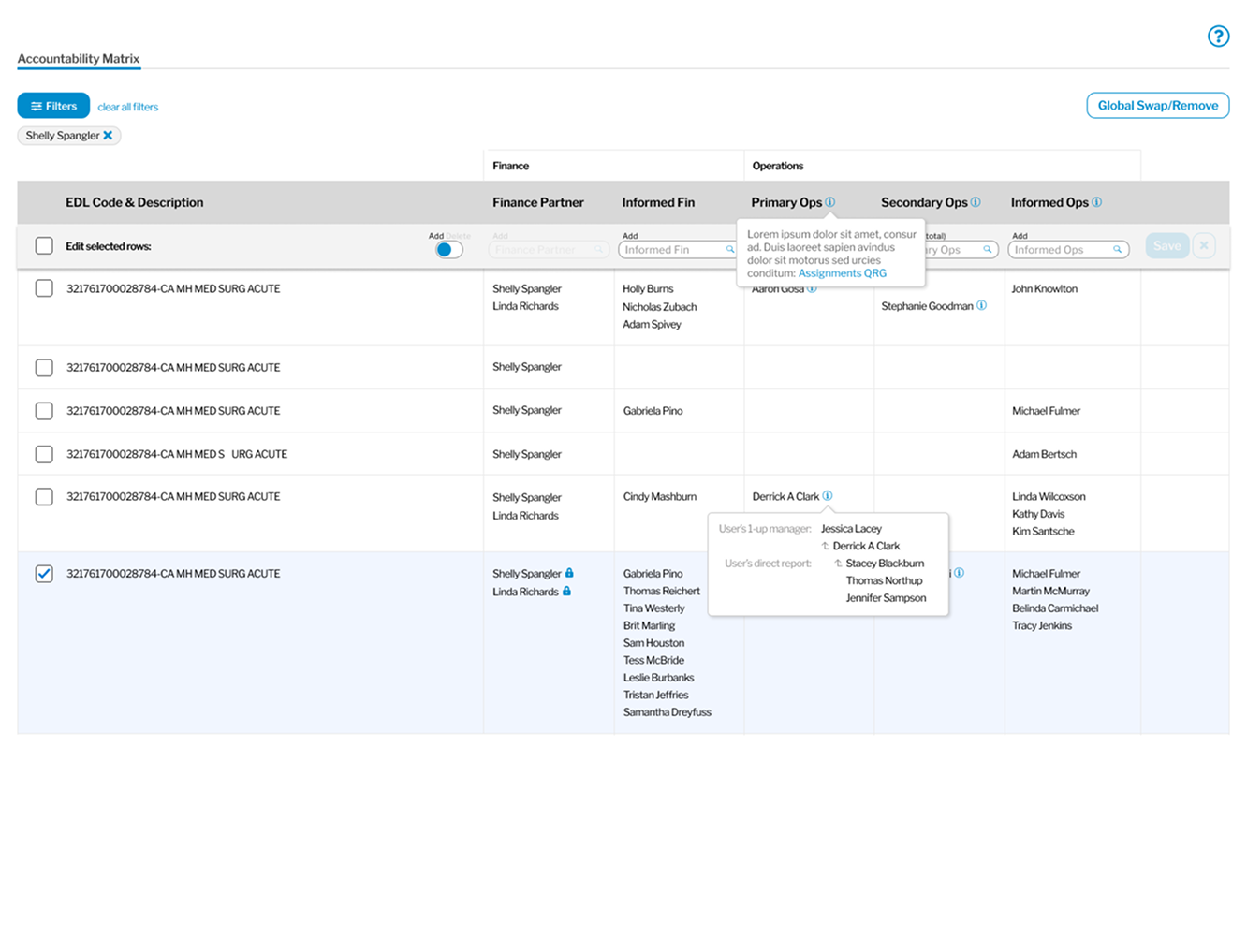
- Department-to-caregiver grid view
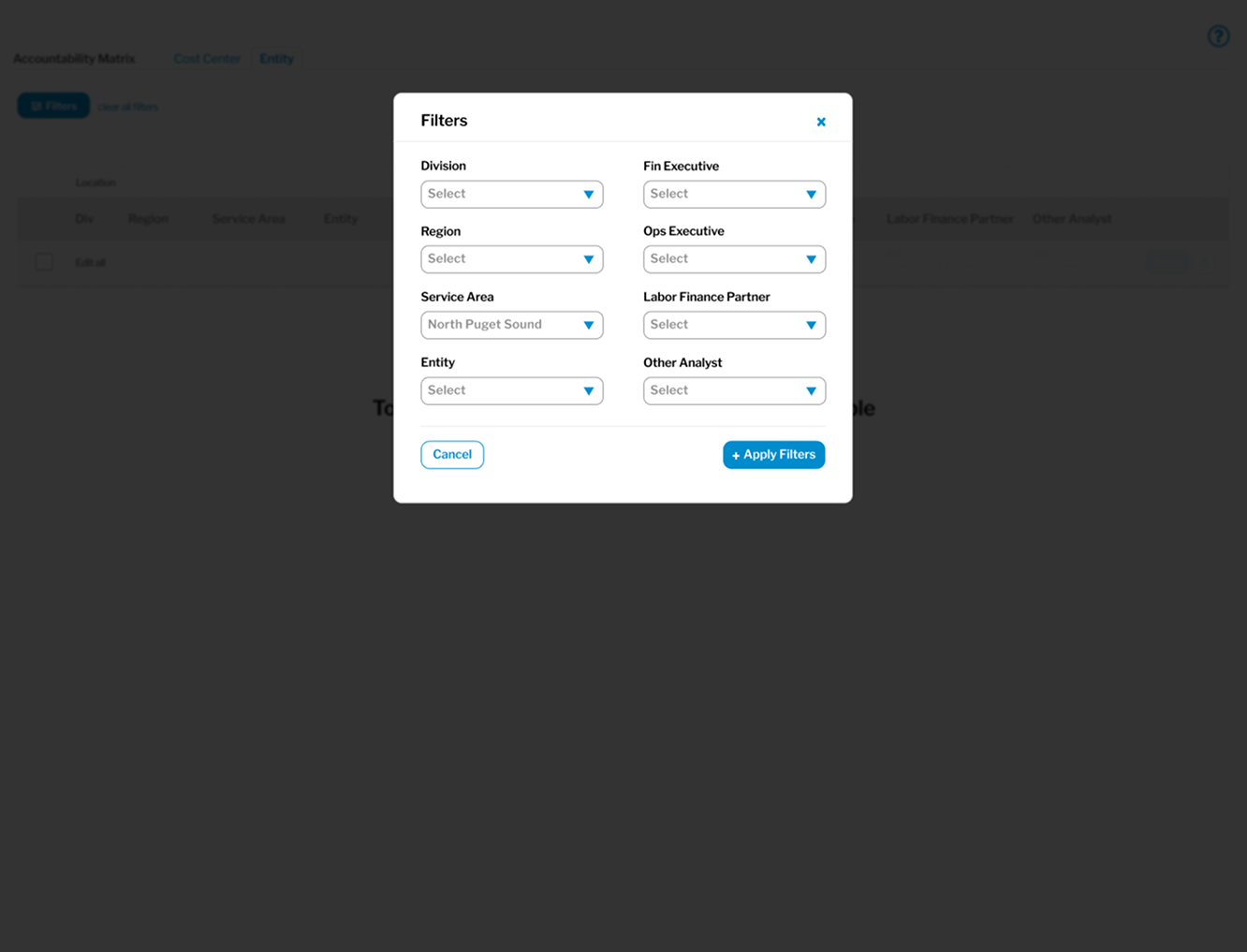
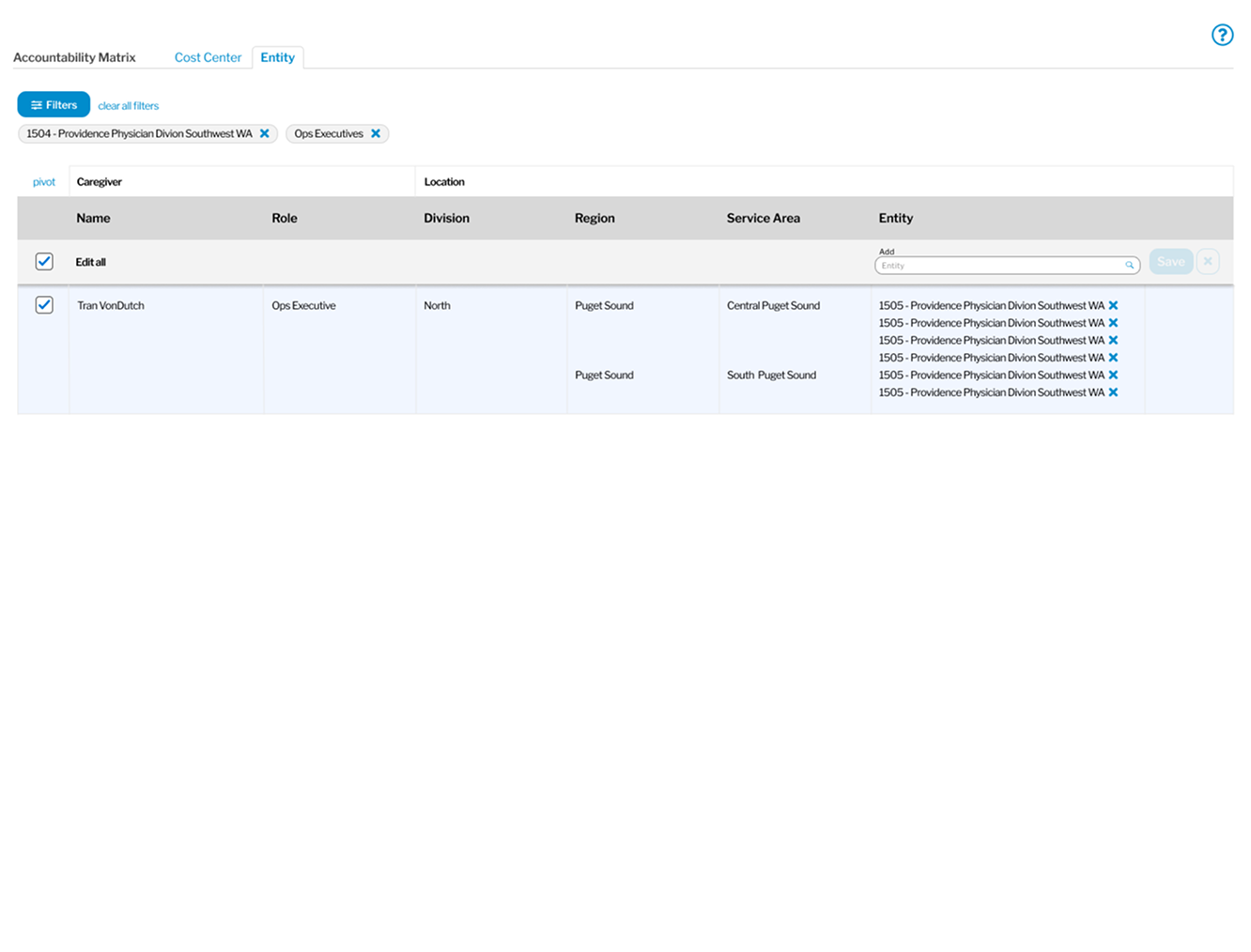
- User filters (region, state, hospital, department, role type)
- Search by department ID or Employee ID
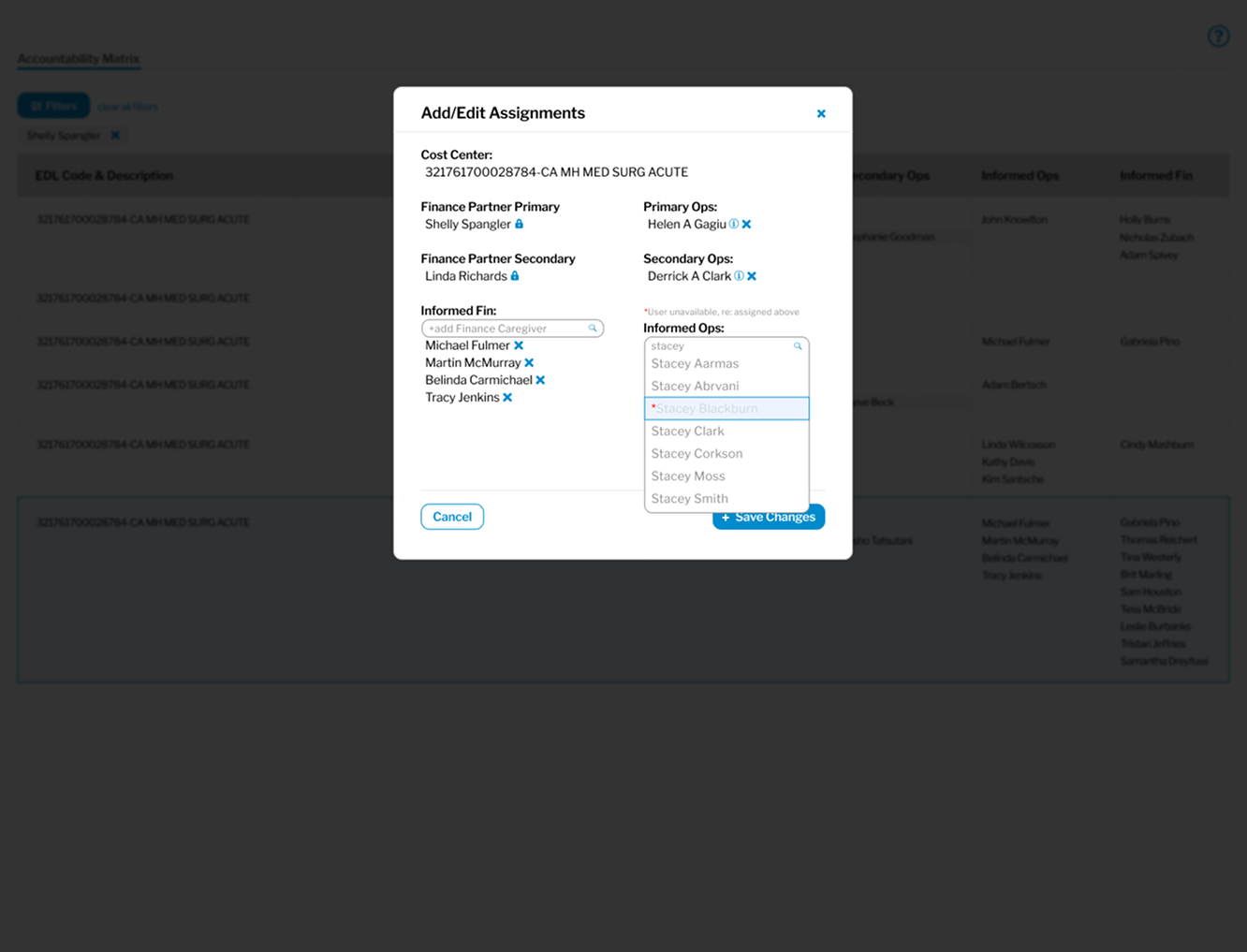
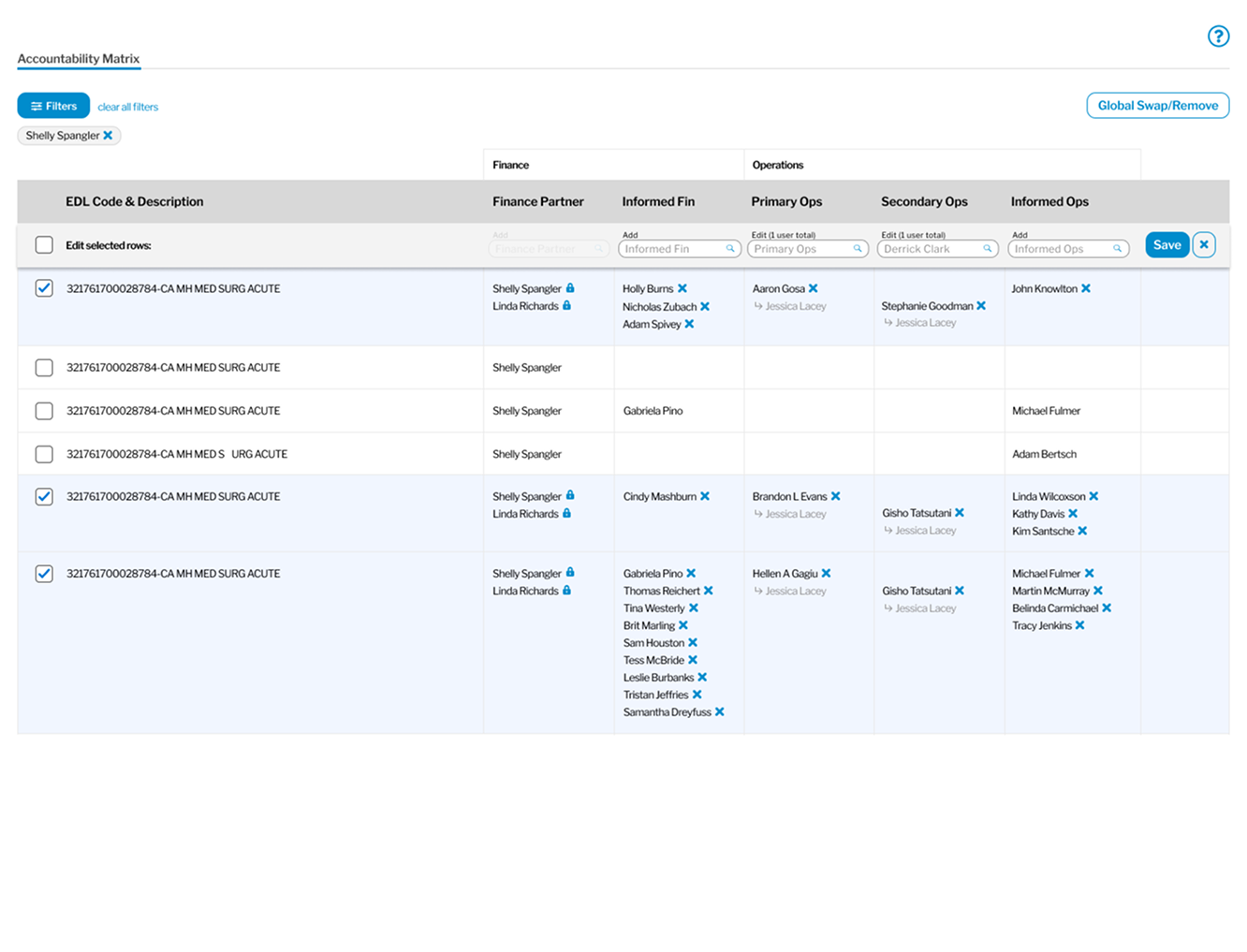
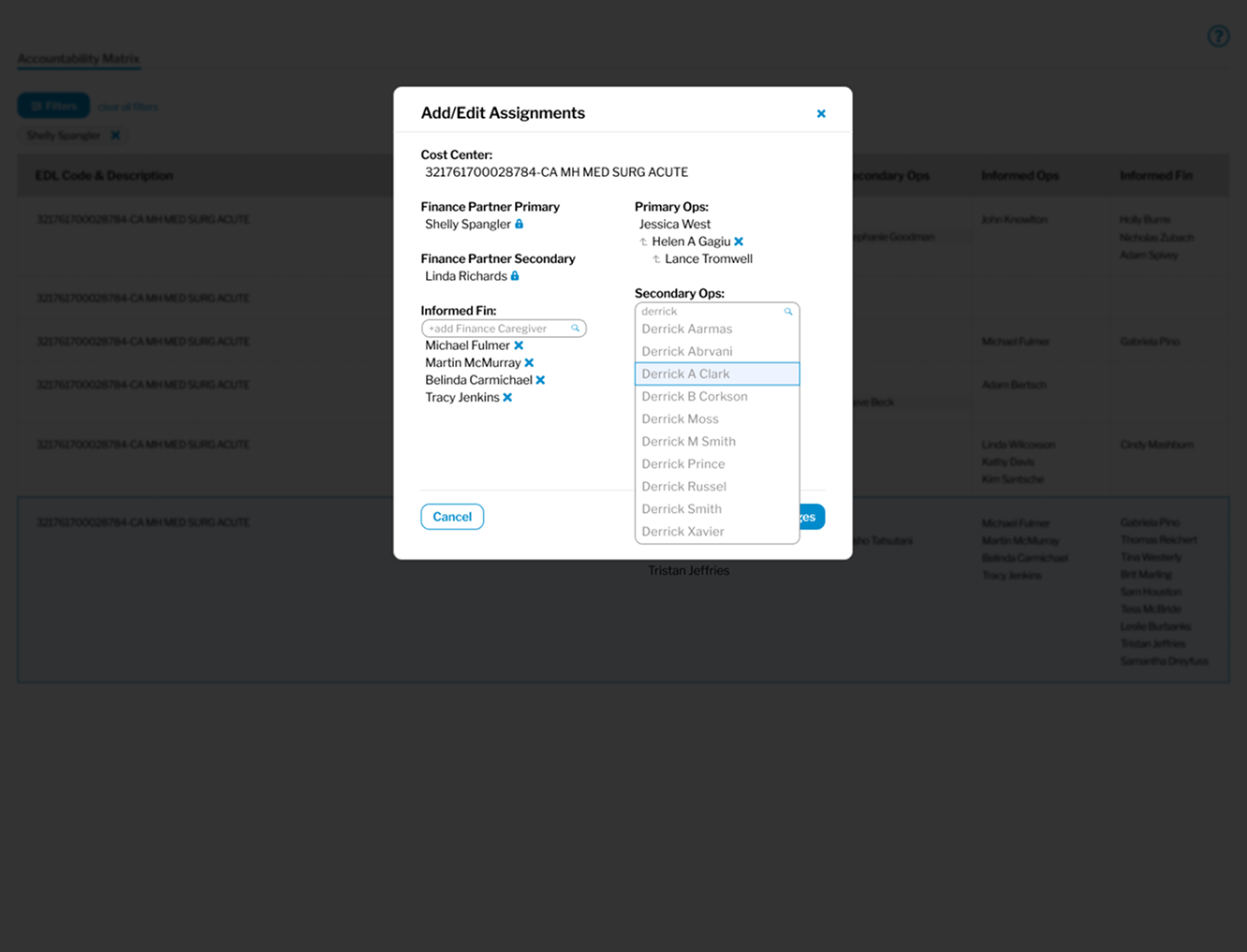
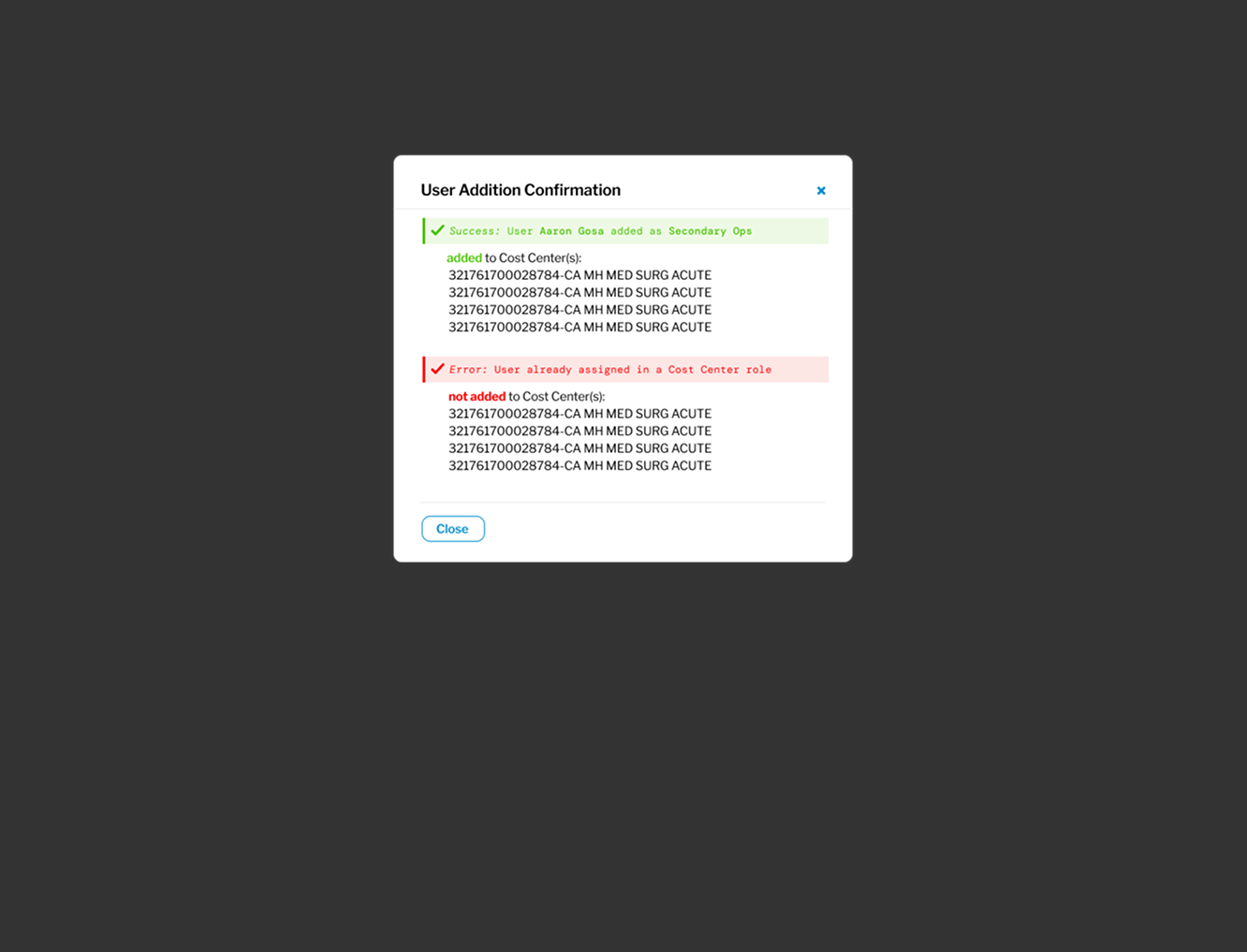
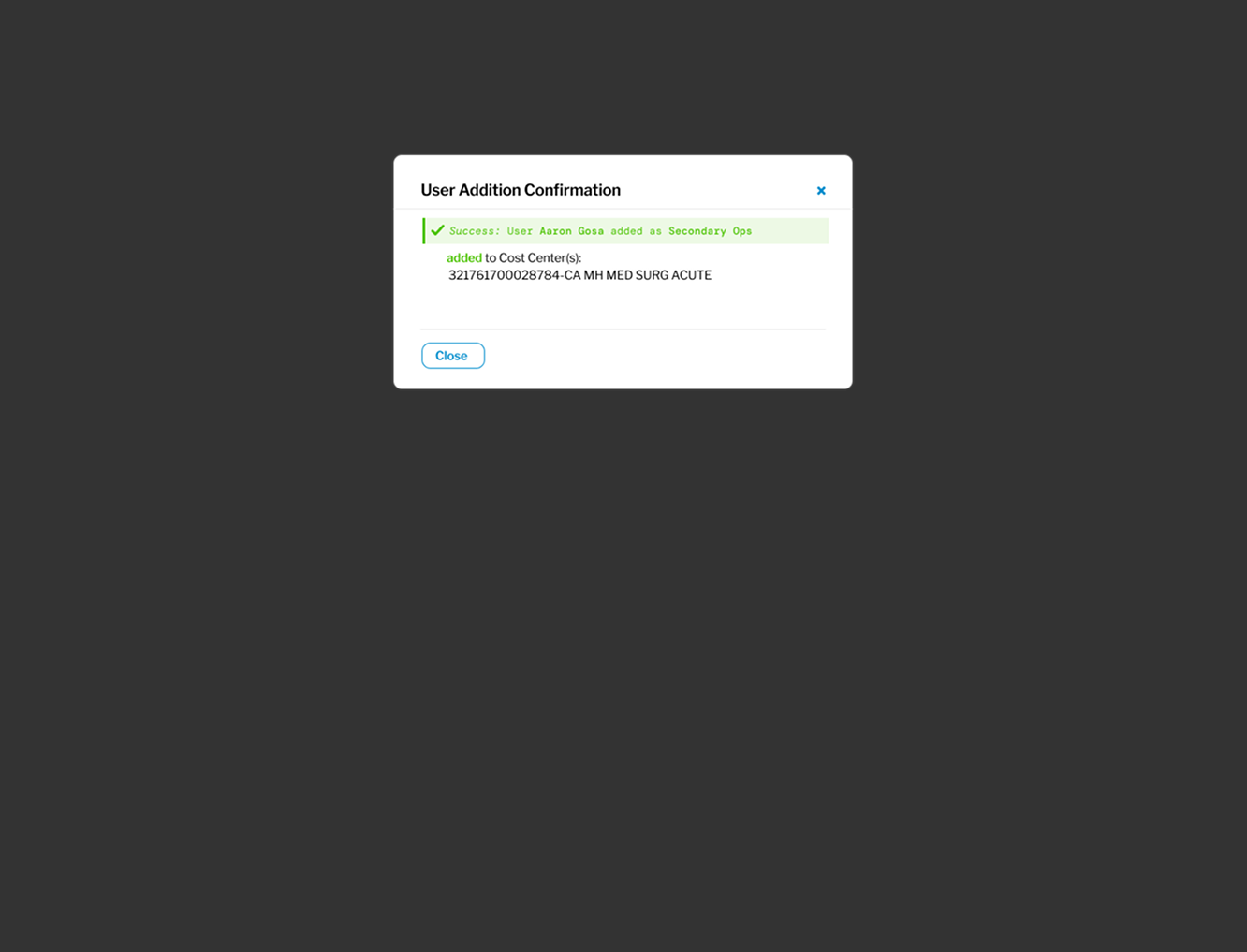
- Assignment edit modes
- Global swap/replace workflows
- Super-user upload and rollback workflows
Designing role specific workflows
The tool supports two primary user groups:
Finance Partners
- View departments they control
- See all assigned caregivers within each Ops/Finance role
- Add, remove, or replace individuals
- Sort and filter departments
- Perform full-responsibility swaps for departing or transitioning caregivers
Support Personnel (Super Users)
- Add or remove Finance Partners from the tool
- Migrate entire sets of responsibilities from one caregiver to another
- Upload spreadsheets to do large batch updates
- View change history by department or user
- Roll back erroneous changes
Designing in high fidelity
Once workflows were validated, I created high-fidelity Figma designs.